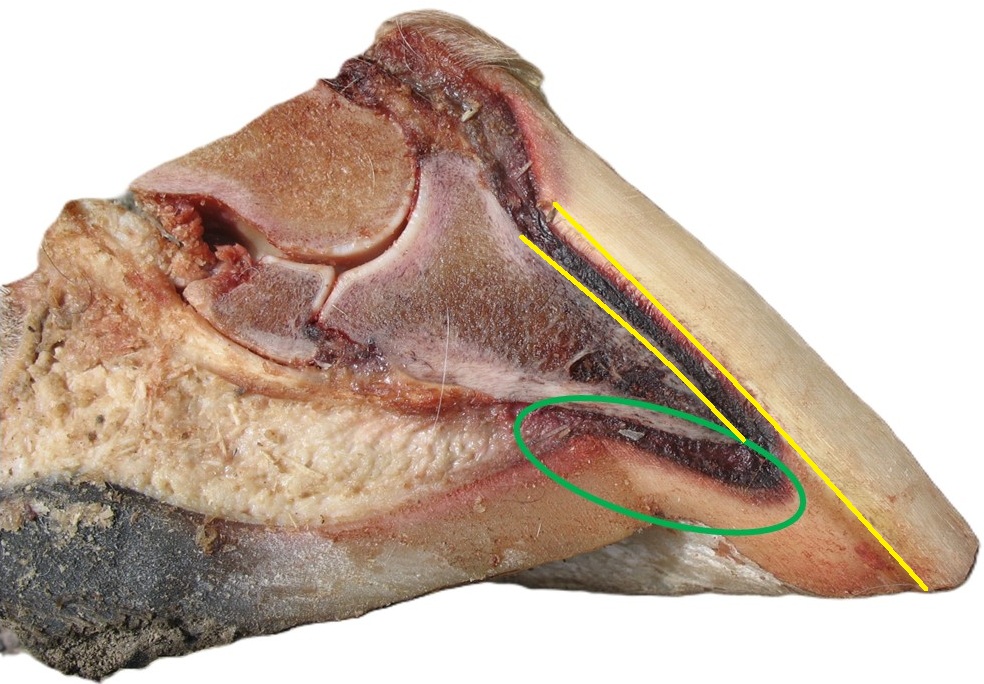
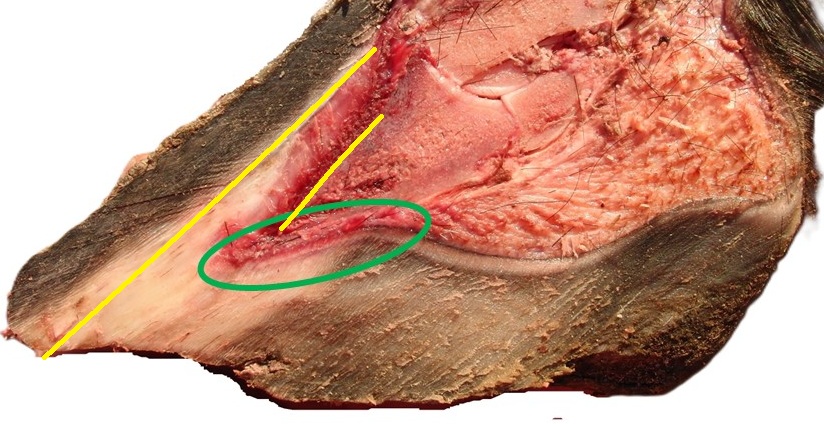
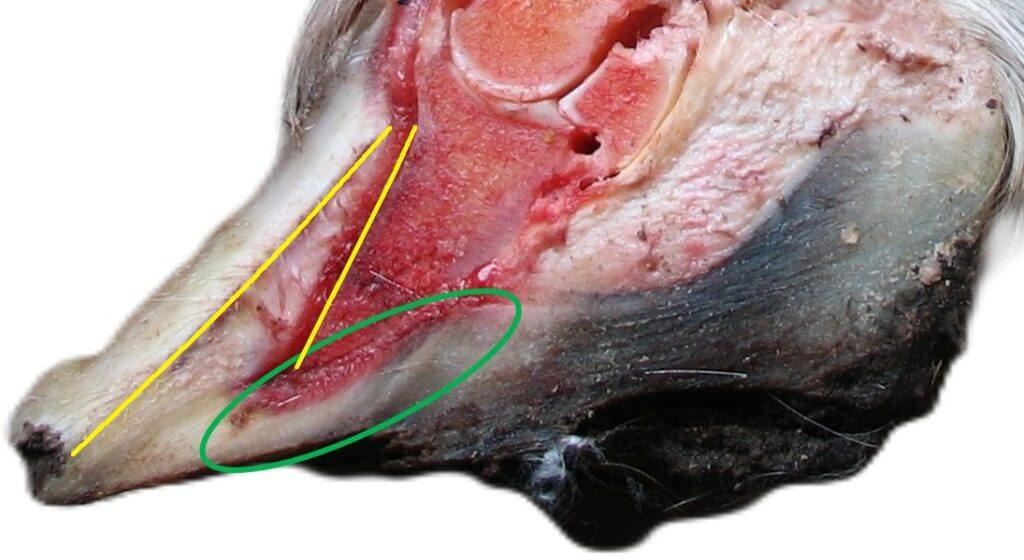
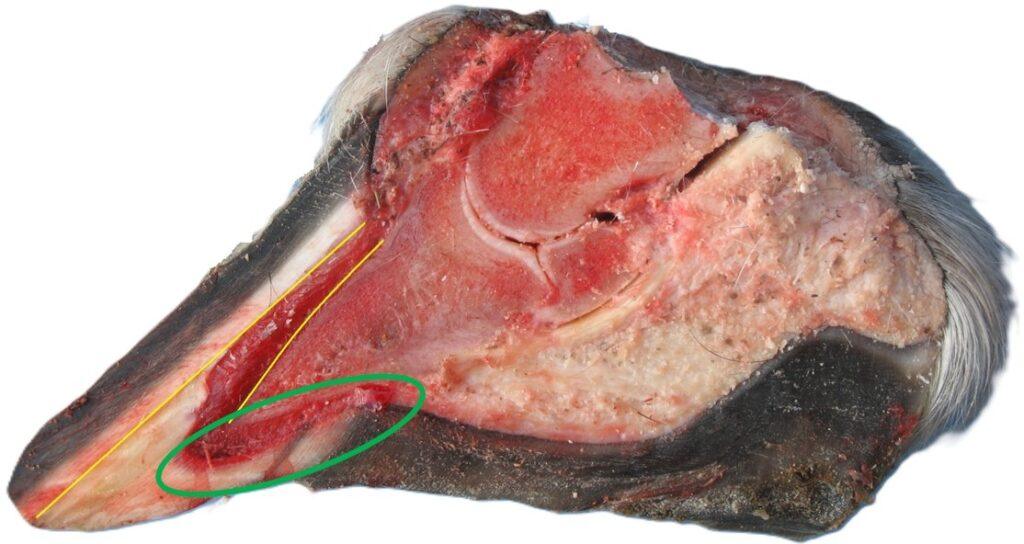
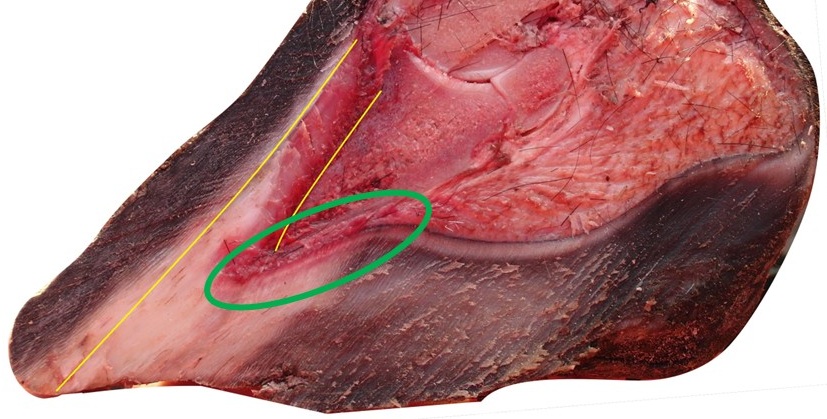
This material contains.
- one sound hoof for reference,
- and several hooves diagnosed with “coffin bone rotation.”
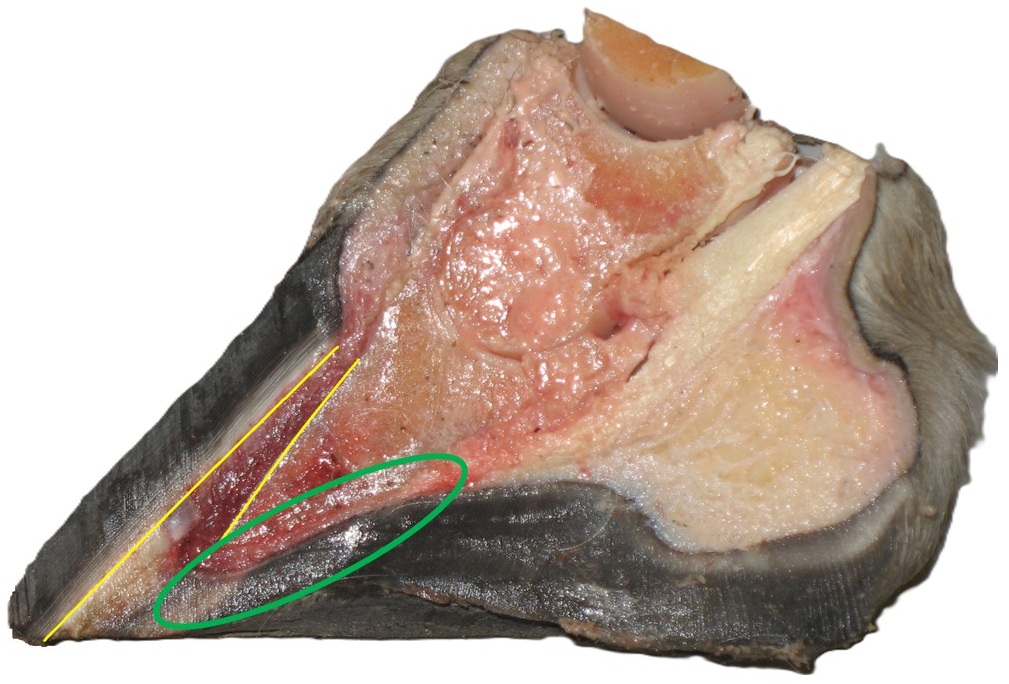
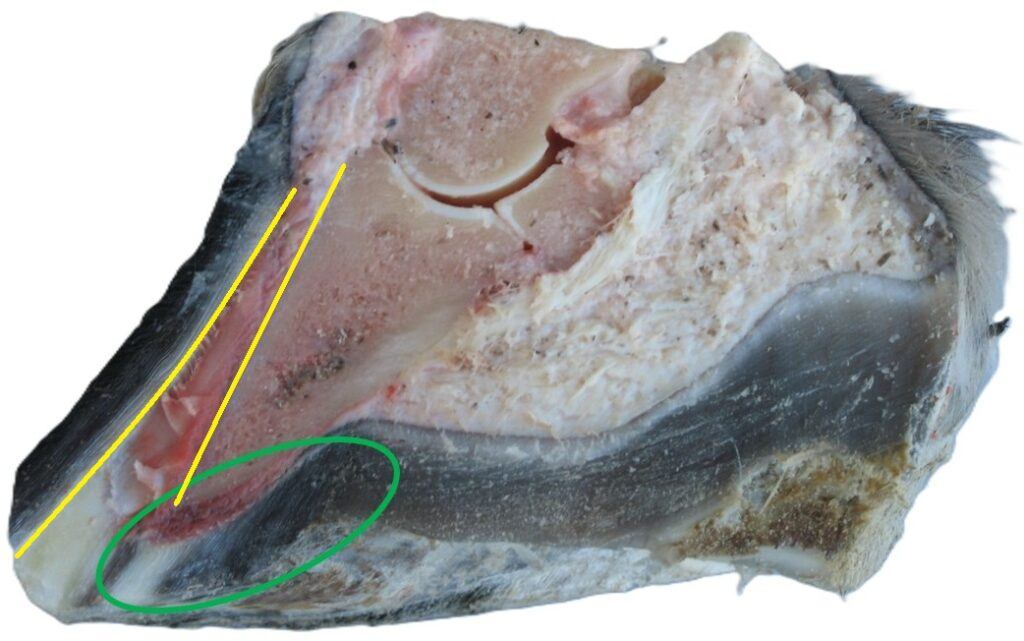
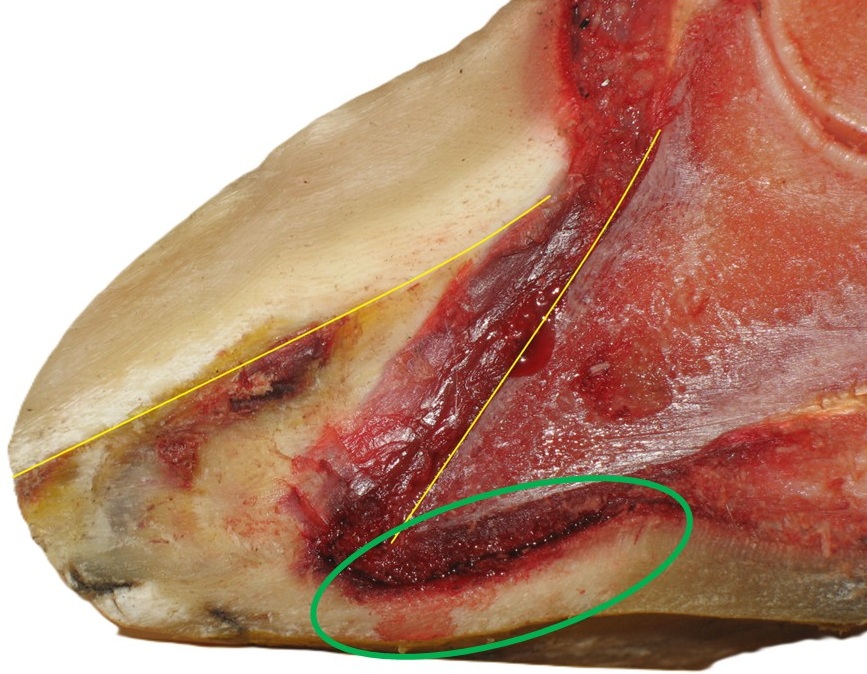
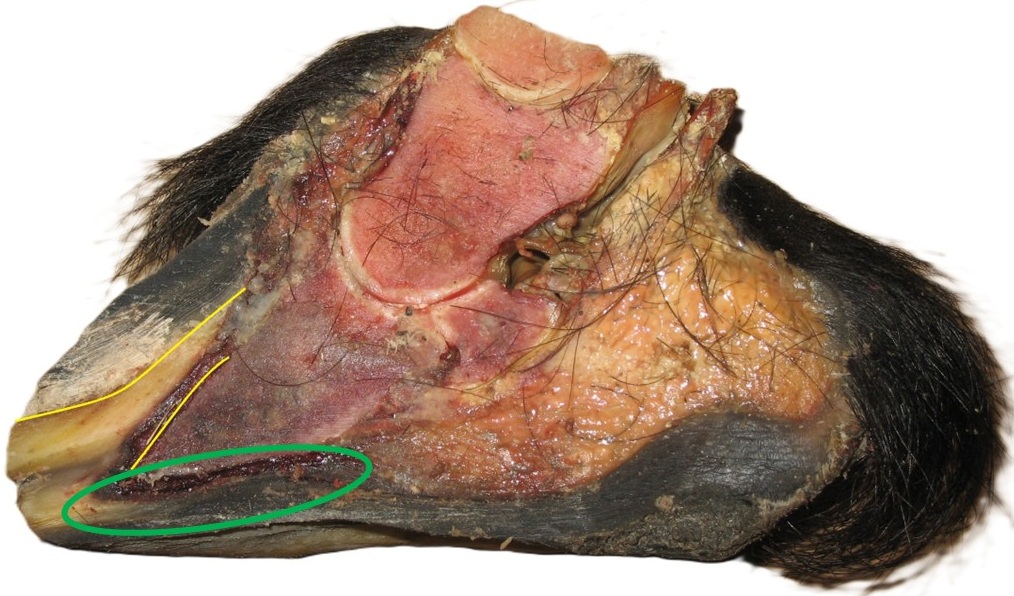
They are shown specifically to demonstrate that intact corium beneath a ‘rotated’ coffin bone is normal, not exceptional.
This is important because extremely dried or uniquely deformed specimens are sometimes presented as representative, simply because they are the only examples available to publishers with small picture libraries.
They are not.
If the DDFT would pull “hard enough to rotate the coffin bone” in an unloaded hoof, the whole hoof would just tip/rotate.
If the DDFT would pull “hard enough to rotate the coffin bone” in a loaded hoof, the coffin bone would have to crush everything that was in its way when changing position.
The green ovals below mark the areas that must have been completely crushed if the coffin bones had rotated. Coriums and soles under the tip of the coffin bone would have shown signs of cruch damage, but there are none. The damaged hoof tissue is always above the coffin bone, which is evidence that the coffin bones have never rotated down, even though all but one of the following hooves have the condition “coffin bone rotation”. The one that doesn’t is only there to show you what the tissue looks like in a hoof that doesn’t have the condition.