What is NPA? NPA means that the front of the coffin bone is higher than the rear, like in this picture.
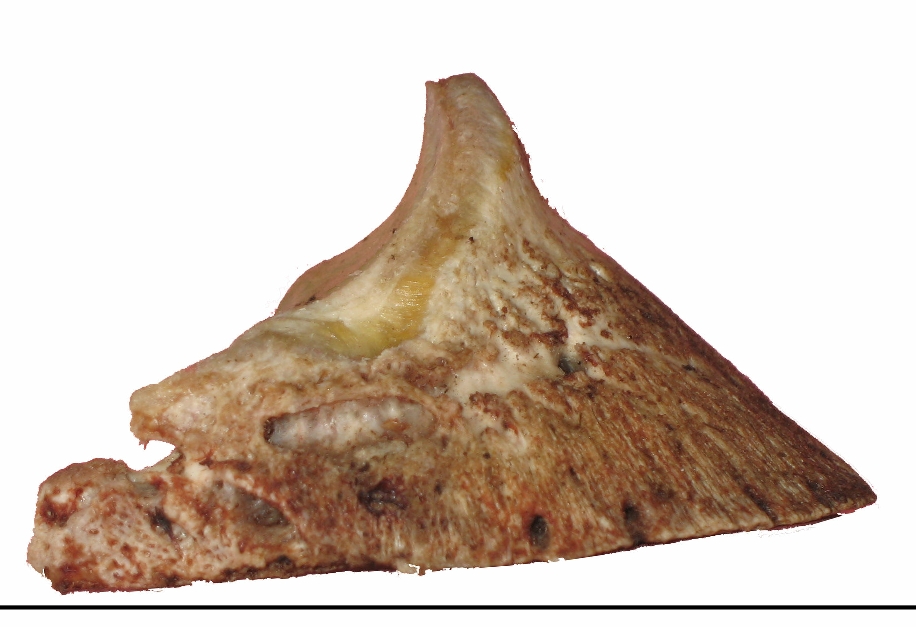
I have never seen anyone refer to any other reference level than the horizontal line, and it is always diagnosed from a radiograph where you can’t see anything more than the hoof and the lowest part of the leg. But does the horizontal level even exist in the horse’s world? Is natural ground ever horizontal? Compared to the horizontal level, walking downhill will always create a Positive Palmar Angle, and walking uphill will always create a Negative Palmar Angle.
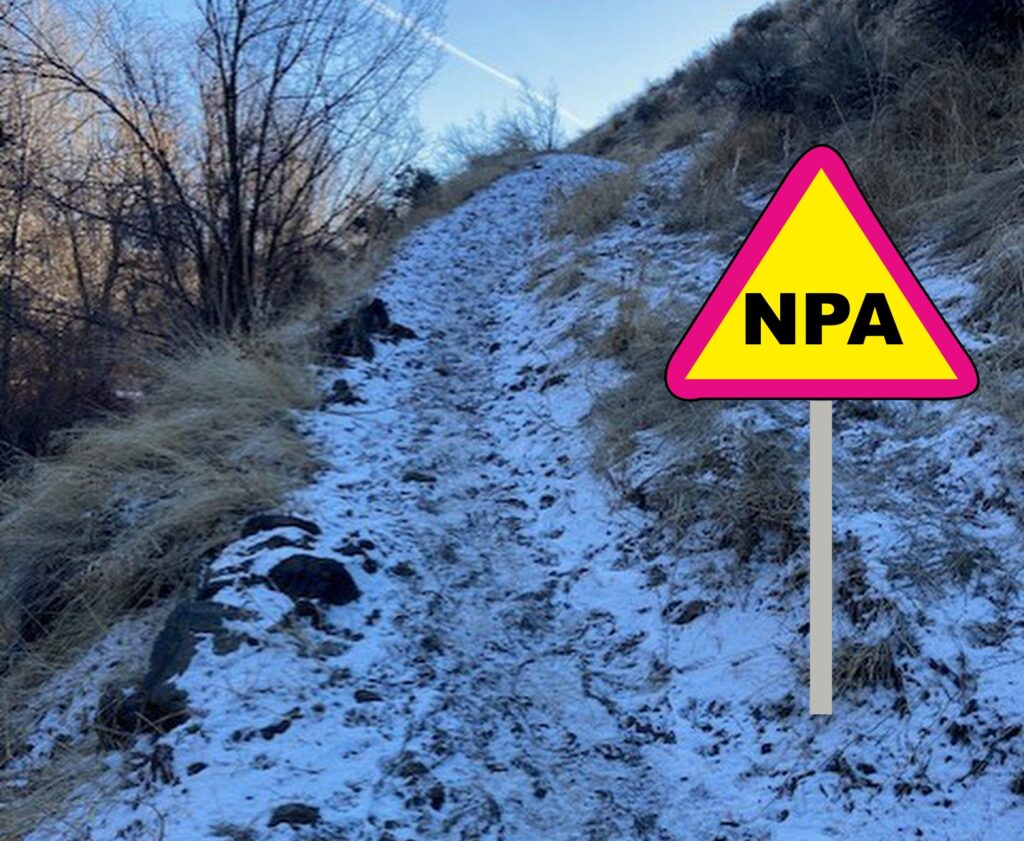
When the horse is walking on a man-made surface that happens to be horizontal, the first part of the stride, when the leg is pointing forward, the Palmar Angle will be Positive compared to his skeleton, and the last part of the stride, when the leg is pointing backward, the Palmar Angle will be Negative.
If your horse is suffering from NPA, then it’s not NPA. NPA is natural, and happens in every stride, in every uphill passage; every horse standing under himself has it.

Horses standing like this have serious NPA in his front hooves, but that is not his problem. His real problem is thrush, and he chose to stand in a position that gives him NPA because that is nicer than standing on a thrush-infected frog. If you would lock all the lower joints and then move the hoof forward, the toe would stick up, and the coffin bone would have a negative Palmar Angle even though it looks ground parallel when standing under.
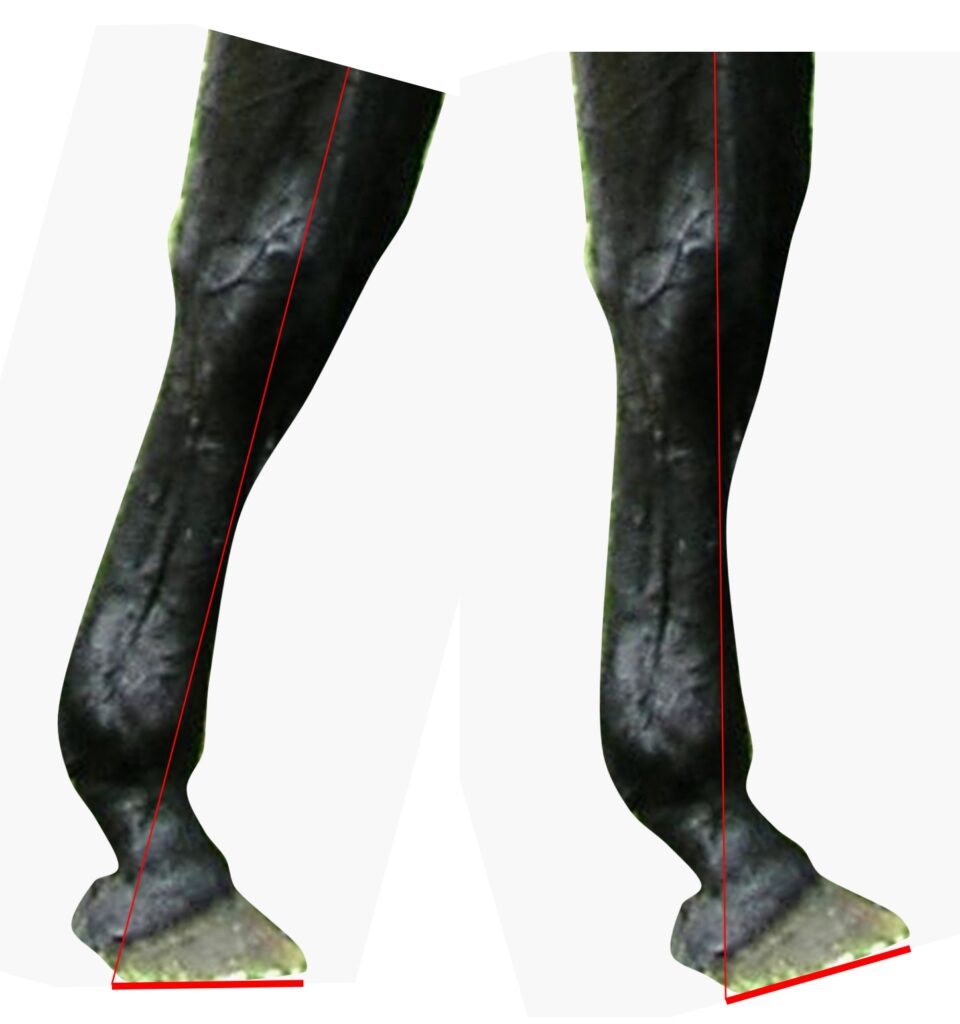
The left leg is from the picture above, and the right leg is the same, but with the joints locked and the hoof moved forward until the leg became vertical. Since all joint angles are the same, both legs must have the same amount of NPA.
This is ridiculous, isn’t it? But one more thing. I’ve heard someone say that the risk with NPA is that it over-stretches the DDFT. So if the hoof has a 3 degree NPA och walk in a 10 degree uphill, that will equal a 13 degree NPA on horizontal ground, and that is so much more dangerous than the 10 degree NPA due to the uphill.
If your horse shows NPA on the radiograph, the most common reason is that the toe wall is sticking down too much and needs to be trimmed. In most cases, the hoof will go from untrimmed with NPA to trimmed without NPA in one trim.
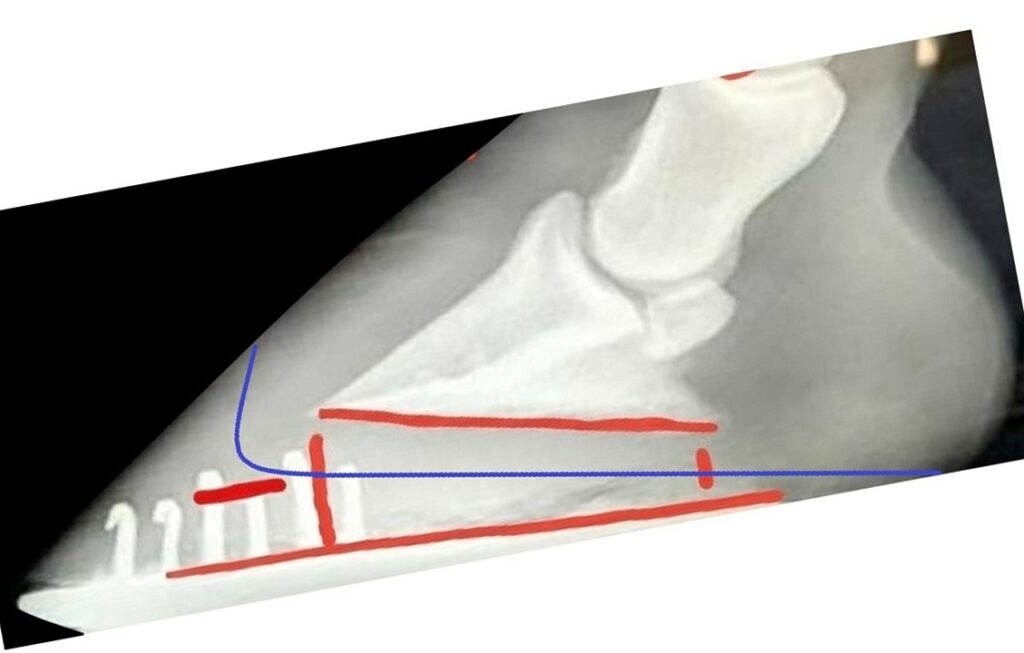
If that isn’t working, then it might be a serious problem that is much more complicated than NPA, and that is a crushed or collapsed heel.
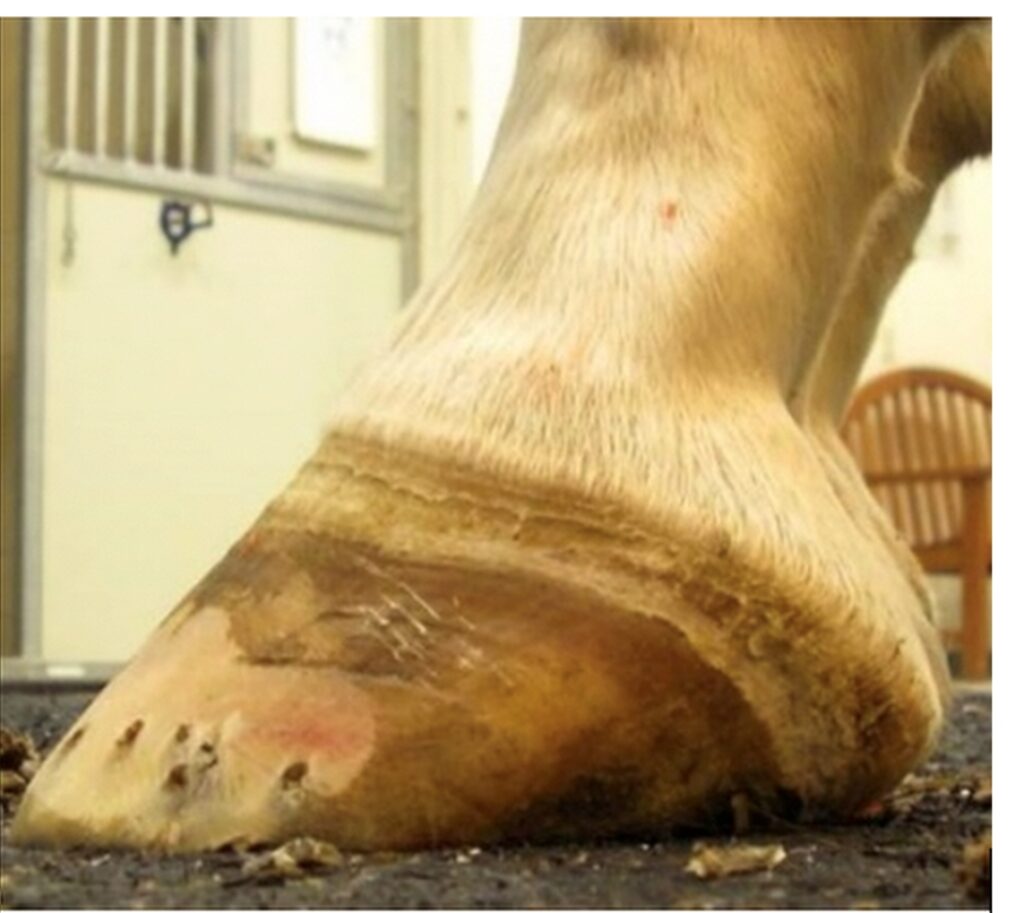
In this case, the heel wall has turned so much forward that it can’t carry any weight. If this is an adult horse with a thin digital cushion, I would say it can’t be rehabilitated, but if the digital cushion is okay them it might work to slowly strengthen the frog and heel region. Take this as a warning and never let your horse get under-run heels. It is much nicer to rehabilitate under-run heels than to cry over collapsed heels.