Equine Physics is not a trimming technique or a hoof care method; It describes the Physics and the Laws of Nature that all techniques and methods must apply to because if physics doesn’t apply to horses, you can be sure they would fly.
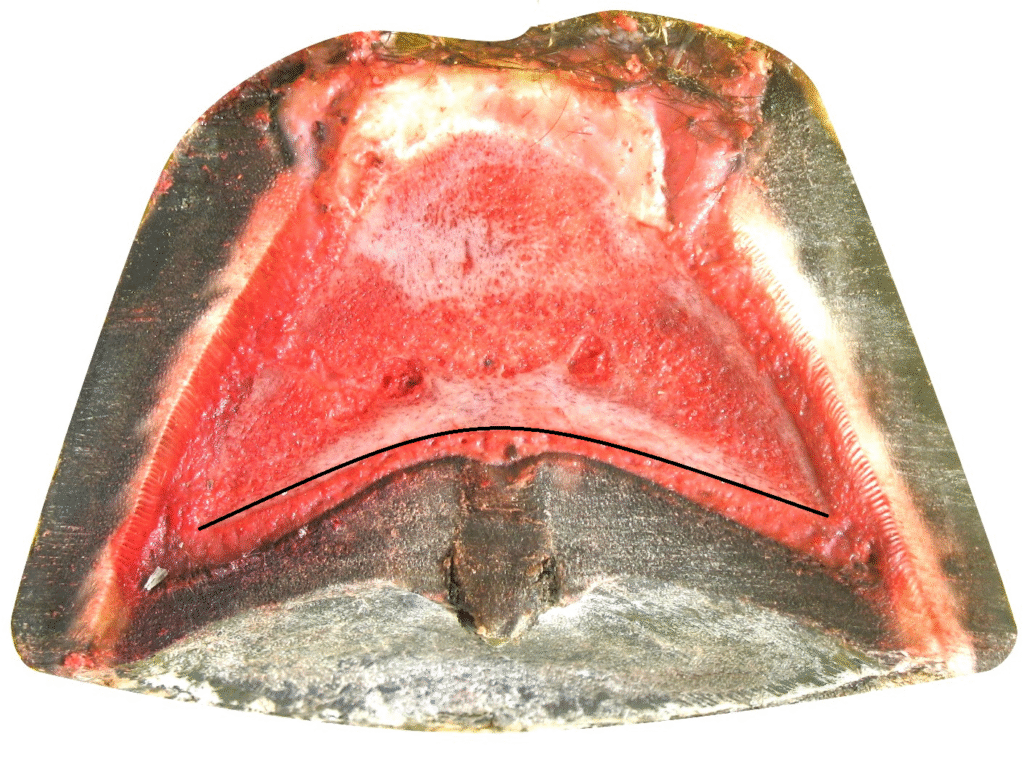
The above picture shows a very good-looking cross-section of an equine hoof. Both the bottom of the coffin bone and the sole have very good concave arc shapes, which are usually associated with less over-sensitivity. Bones are, however, a dynamic
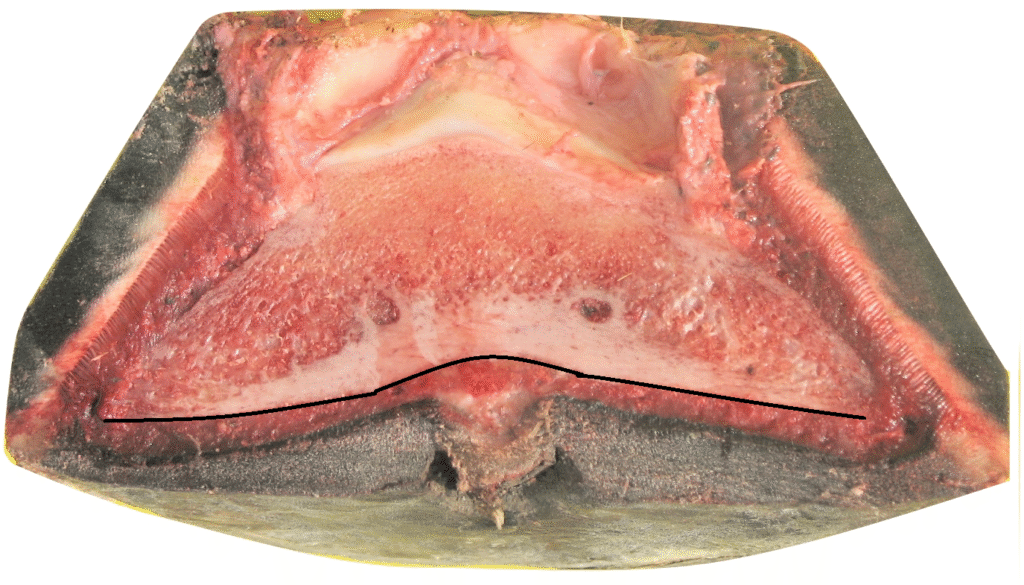
Imagine the short pastern bone pressing down on the center of a coffin bone that only has support under the most peripheral parts of the bone, where the shoe is. In the long run, the middle of the bone will gradually be pushed down, and the peripheral parts of the bone will be pushed up, causing the nice arc from the top picture to become flatter as shown in the bottom picture.
I believe the flatter hoof above was shod early and had been peripherally loaded for a long time. Bones are a little flexible, but not in a way that makes it possible to bend them once, and they stay bent, but you can direct forces to them that affect the remodeling of the bone tissue, which would make them grow bent. You can also see that the sole has been stretched thin and bent on the left side of the picture.
Something in the back of my mind whispered something about Osteoclasts and Osteoblasts, so I asked Chat GPT for more details, and this is what I got:
🦴 Bone Remodeling — How Bone Constantly Renews Itself
Bone tissue isn’t fixed or “dead” — it’s alive and constantly being rebuilt in a dynamic process called bone remodeling. This process lets bones adapt to stress, repair micro-damage, and maintain strength.
It works through two main types of cells:
Osteoclasts – the bone removers
- These cells break down old or damaged bone tissue.
- They dissolve the mineral part (mostly calcium and phosphate).
- They digest the organic part (mainly collagen).
- This process is called bone resorption.
Osteoblasts – the bone builders
After the osteoclasts have done their cleanup, osteoblasts move in and build new bone tissue.
- They produce collagen and other proteins to form a scaffold.
- Then, minerals like calcium are deposited to harden the new bone.
- Some osteoblasts become trapped in the new bone and turn into osteocytes, which monitor bone health and signal when remodeling is needed.
⚖️ Why It Matters
Wolff’s Law: Bone adapts to the forces placed on it. If a bone is loaded (like from weight or tension), it grows stronger and denser. If it’s not used (or if forces are misdirected), it becomes thinner and weaker.
This is how bones change shape and density over time to meet new mechanical demands.
💡 In the Context of the Hoof
If the horse’s coffin bone is properly loaded through the sole, the bone receives balanced, stimulating forces — maintaining strong, healthy tissue.
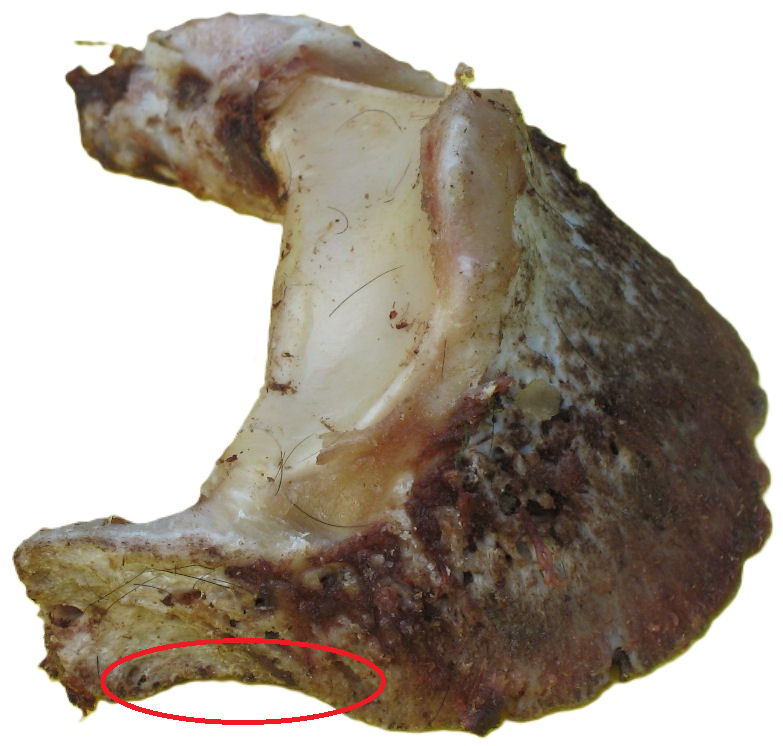
If the load is misdirected through the hoof wall (as with metal shoes), parts of the bone may lose stimulation and start to remodel incorrectly, leading to weakness, resorption, or deformation over time. The regrowth of bone can, and will, be pushed away by pressure, but it will never push back. The picture below shows a coffin bone that was exposed to the pressure from a hoof capsule with a severe quarter crack. The bone did not regrow where the pressure from the crack was applied, and even if the hoof was correctly trimmed and the crack grew away, the bone would still not retake its natural shape.
The deformed coffin bone below was taken from the cadaver hoof with a severe quarter crack further down. The crack had redirected natural forces in the hoof capsule to push inwards on the bone. This altered the natural remodeling of the bone tissue, and the regrowth took an easier direction. Such a deformed bone will never retake its natural shape since it would take a new force to direct growth to fill the void, and that will never happen.
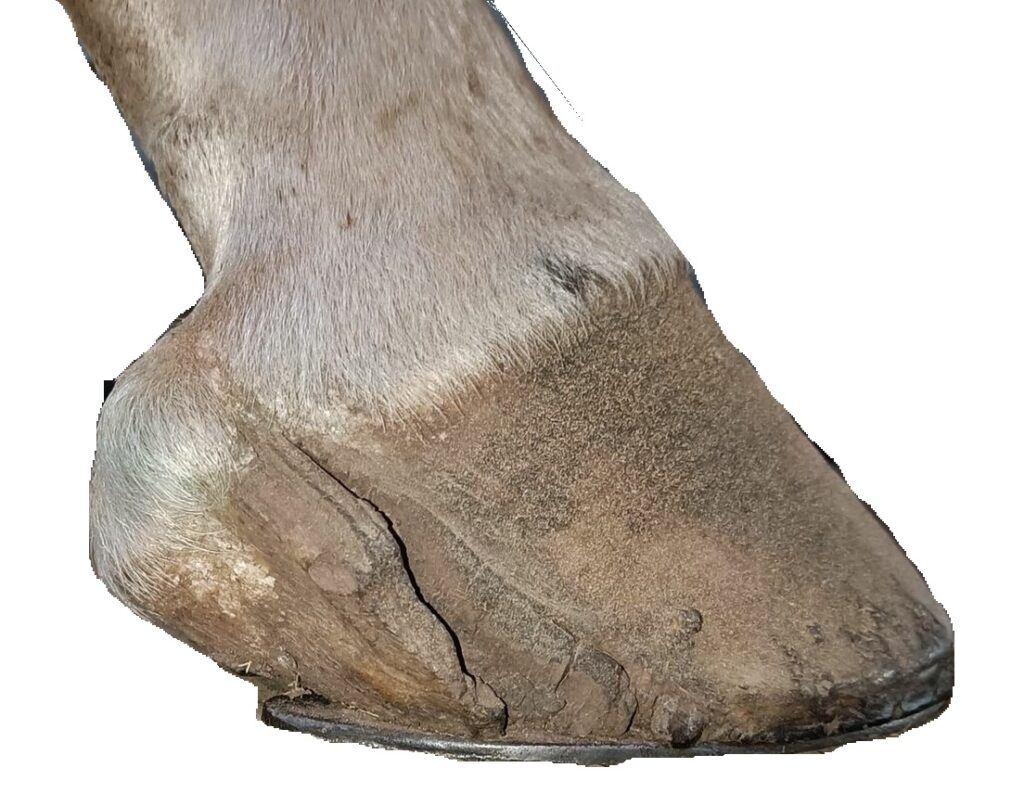
Quarter cracks like this are usually very painful for the horse, so it might be difficult to lift the hoof, but the crack in the hoof capsule is absolutely rehabilitatable, but of course not while shod. There will be more about rehabilitating cracks later.
Deformed sole.
There are three kinds of horn in a horse’s hoof:
- Wall horn
- Sole horn
- Frog horn
The most characteristic difference between them is the humidity they contain, which affects how flexible they are. None of them contains either blood or nerves. Their job is “only” to protect. None of them has any need for humidity from the outside. On the contrary, external water is for the hoof what water is for your car engine. It can cool them, but don’t try to get it inside them. All external hoof horn is supposed to have unlimited access to humidity from the inside, and therefore, no need for humidity from the outside, and the blood contains everything the horn needs to stay healthy and flexible. When the hoof capsule gets covered with small cracks, this is a clear sign of poor hoof mechanism and blood circulation, just like cold hooves are.
Sole Horn.
What most people don’t consider is that the sole horn is flexible, bendable, and stretchable. The sole horn is only produced under the coffin bone and a couple of millimeters (1/8″) outside. If the hoof capsule is bigger or the toe longer, the sole must be stretched to reach the hoof wall. When the sole gets stretched, it becomes thinner, and is always thinnest under the edge of the coffin bone. And that is what you see within the yellow circle in the picture below.
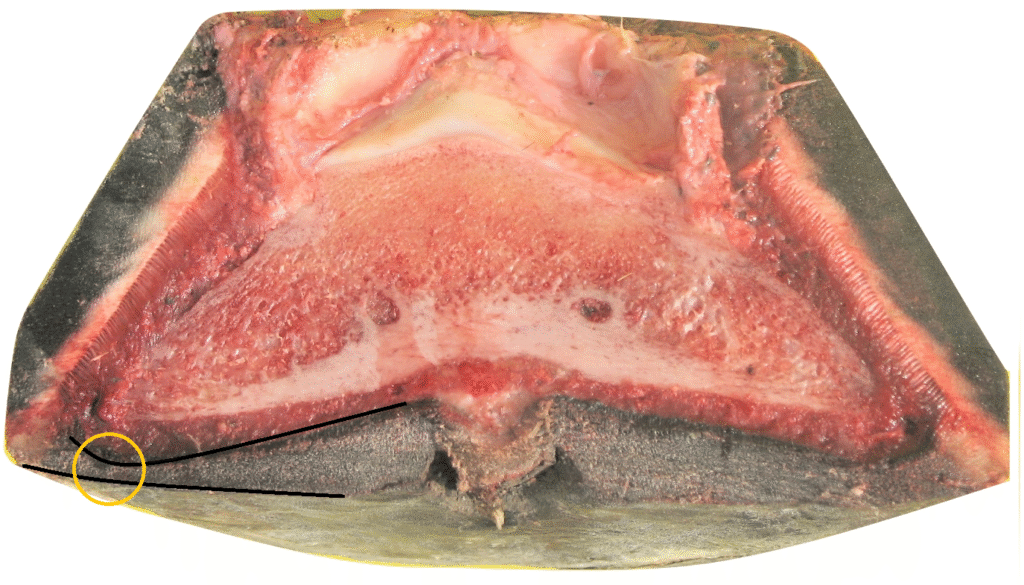
The hoof capsule was far too big, and ground pressure on the hoof wall forced it out and away from the coffin bone. When this happened, the hoof wall stretched out the sole, making it thinner (yellow circle). The laminar junction is so strong, when it is sound, that the sole will break before the laminar junction does, and that is what you can see in the next picture.
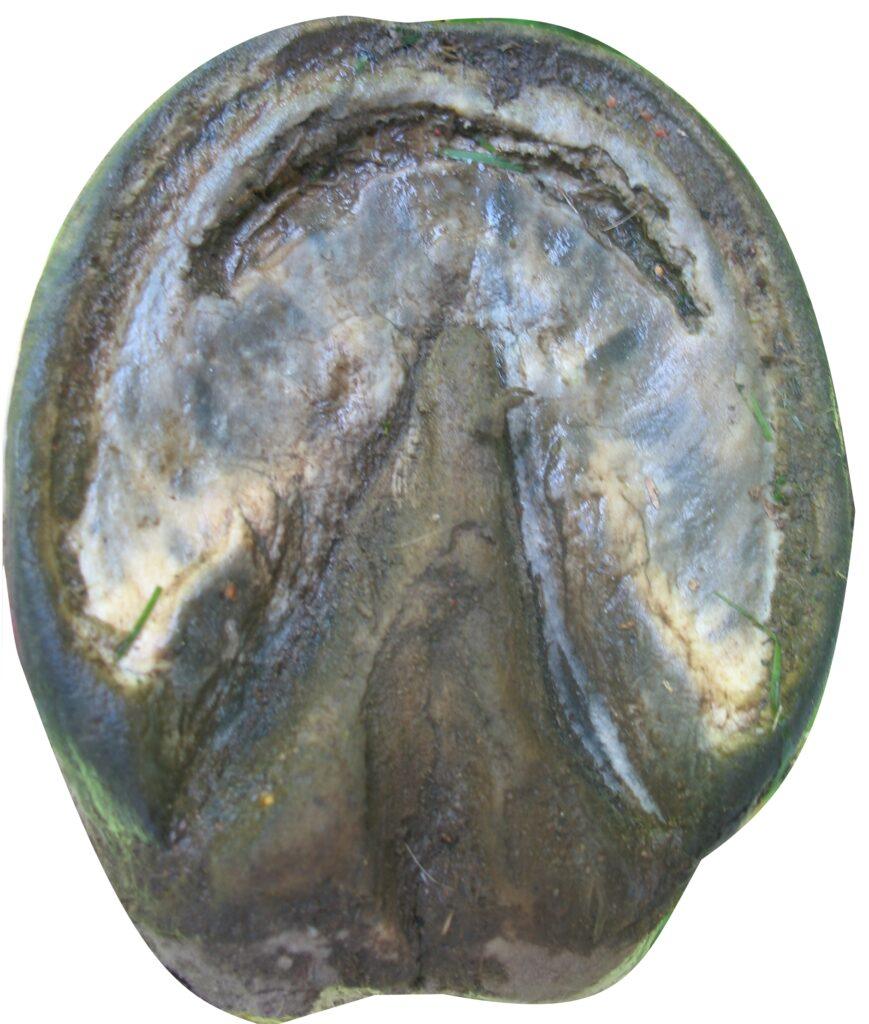
The laminar junction was sound when the hoof suffered laminitis; the ground pressure on the long toe pressed it out and away from the coffin bone, which stretched the sole until it broke. This has nothing to do with the coffin bone penetrating the sole. The hoof should be shortened all the way into the crack. There will be more about extreme toe shortening in a separate segment of the Good Protocol.